
Contents
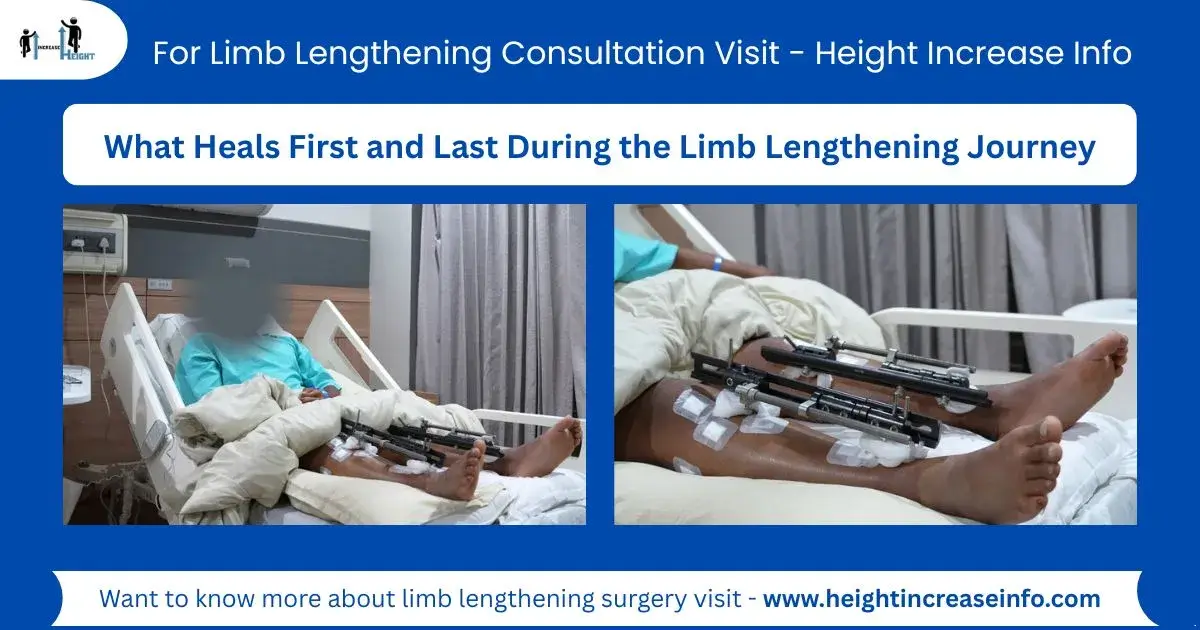
What Heals First and Last During the Limb Lengthening Journey
The moment you walk down the road to a new height or corrected alignment is a bit like the garden growing in slow motion. You know that in the depths, there are incredible changes going on, but you can feel that nothing is moving all day. By committing to leg lengthening surgery, you are asking your body to do something truly miraculous. You are asking it to make new bone, new nerves, and new muscle tissue out of thin air.
Know the timing of this healing process to keep you sane through the months of recovery. A lot of things get better, but no two heal at once, so celebrating some small wins will help you to be patient with the parts of your body that are taking their sweet time.
The Early Wins: Skin and Soft Tissue
In the first few weeks following your leg lengthening surgery, the most visible healing happens at the surface. Your skin is incredibly resilient and is usually the very first thing to close the door on the surgical experience. The small incisions where the surgeon placed the hardware will typically heal within ten to fourteen days. This is the phase where you move from having "surgical wounds" to having "scars."
While your skin is busy knitting itself back together, the initial trauma to the soft tissues also begins to settle. The severe and acute pain of the surgery itself tends to vanish within the first month. If you feel a little relieved at this point, it might start to lessen the swelling, and your limb starts to look a little like your own again. This is, but only the beginning of a much longer story.
The Middle Phase: The Bridge of Soft Bone
Once the "distraction" or lengthening phase begins, the healing process shifts into a unique biological gear. Unlike a typical fracture, where the two ends of a bone stay together, leg lengthening surgery involves slowly pulling those ends apart. In this gap, your body creates a "soft callus," which is a jelly-like bridge of collagen and minerals.
This soft bone marks amazing development, but it is not yet strong enough to withstand your weight. This is often the most frustrating part of the journey, where your cuts are healed, and you feel ready to move, but your X-rays show a blank or cloudy gap. This “invisible” healing is actually the most active part of the process: your body fills that gap around the clock with the building blocks of a new skeleton.
The Stubborn Finishers: Muscles and Nerves
While the bone is often viewed as the primary focus, the muscles and nerves are usually the last to truly heal and adapt. Bone is rather cooperative, but muscles are stubborn. By lengthening a bone, you are also stretching the surrounding muscles, tendons, and nerves to their limit.
This is why many patients experience a "tight" sensation or even some nerve tingling late in the lengthening process. These tissues do not grow as quickly as bone does. They have to be coaxed and stretched through daily physical therapy. Even after the bone has reached its goal length, your muscles may take several more months to regain their full flexibility and strength. This is a primary reason why the total limb lengthening surgery recovery time can feel so extended. You are waiting for your soft tissues to catch up to your new skeletal reality.
The Final Landmark: Full Consolidation
The bone itself is the last thing to heal. The soft callus will eventually have to be replaced with hard cortical bone strong enough to handle the impact of running and jumping. This process is called consolidation. During this phase, the limb lengthening surgery recovery time becomes a waiting game.
You might feel perfectly fine and even be walking with minimal support, but your surgeon will be looking for the bone to look "solid" on an X-ray before giving you the green light for high-impact activities. This final hardening is the ultimate insurance policy for your future mobility. When that last bit of bone solidifies, the journey is officially complete, and the hardware has finished its job.
Also Read: