
Contents
- Does Height Actually Change Opportunities in Life?
- The Hard Data: Height and Economic Outcomes
- Psychological and Social Dimensions of Stature
- Sector-Specific Impacts: Where Height Matters Most (and Least)
- Mitigating Bias: Actionable Strategies
- Conclusion: Stature vs. Substance
Does Height Actually Change Opportunities in Life?
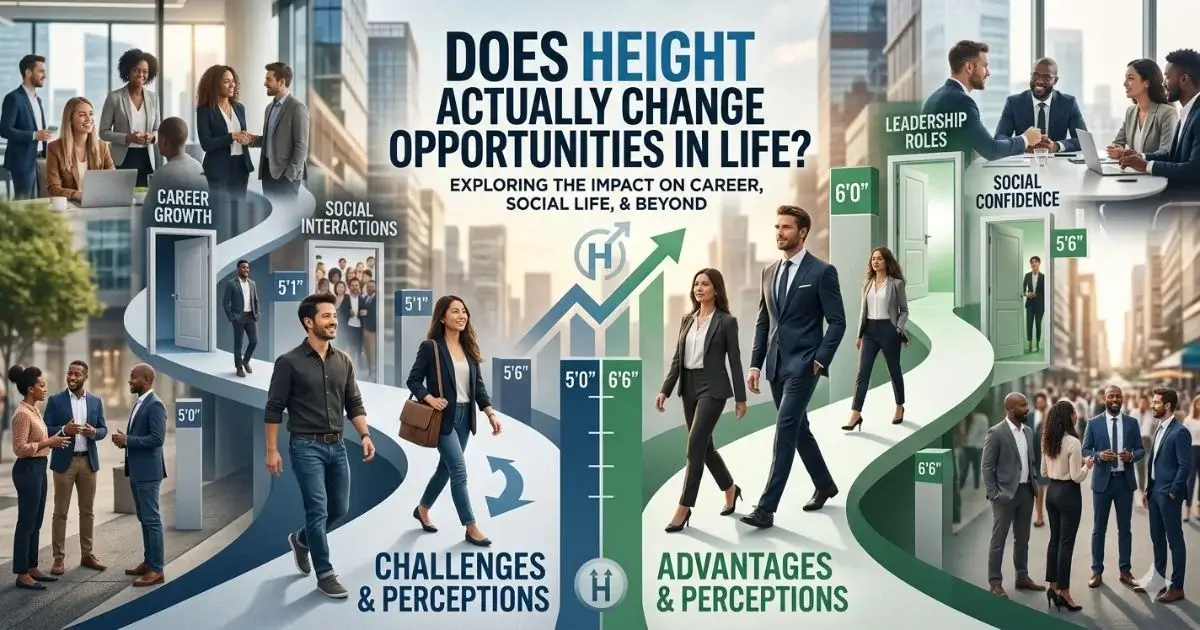
Imagine walking into a job interview. You shake hands with the panel, and right away, they size you up - literally. Studies show that tall candidates often get an advantage. One survey found that men over six feet tall earn 10 percent more on average, than their shorter peers. This isn't an idea; bias based on height really affects how others see us.
Everyone has heard the old jokes about short people who can't reach high shelves. But does height really open or close doors in jobs, relationships, and social circles? This article talks about the facts behind height bias, from paychecks to promotions, and gives tips on how to get around it. We'll look at hard numbers, mindsets, job fields, and smart fixes, all backed by real evidence.
The Hard Data: Height and Economic Outcomes
Height links to money in ways that surprise most folks. Research from economists points to a clear pattern: taller people often climb higher on the income ladder. Let's break it down.
Wage Premiums and Career Trajectories
Taller folks snag better paychecks. The University of Chicago did a study. They found out that for men being one inch taller than average can get them a bigger paycheck. This is because their earnings go up by one to two percent. It is of the same for women but the difference is not as big. For every inch women get, about half a percent more. So why does this happen? This happens largely because of a subtle bias based on height, where people subconsciously assume that tall people are naturally strong and smart. When it is time to talk about salary being tall can be helpful. The University of Chicago study shows that height can affect how much money people make.
This salary correlation doesn't stop at the start. Over a career, it adds up. Taller workers report faster raises and more chances to lead projects. Think of it like a quiet boost in negotiations - your presence just commands more respect without you saying a word. But is this fair? Not really. This unfair advantage is often a primary driver of workplace discrimination based on heights during the recruitment and negotiation process.
Height Bias in Hiring and Promotions
Hiring managers favor height without even knowing it. In mock interviews from a Harvard study, taller applicants got picked 60% more often for leadership spots. Resumes with photos or names hinting at stature faced less bias too. This height bias in hiring stems from gut feelings about who looks "in charge."
Promotions follow the same path. A report from the Journal of Applied Psychology tracked 1,000 employees and saw taller ones jump ranks quicker. Women face this less in some fields, but it's still there. To fight it, companies now train staff on blind screening to focus on skills and ignore any bias based on height.
The 'Leadership Look': Height in Executive Roles
CEOs tower over the rest. About 58% of Fortune 500 bosses stand over 6 feet, way above the average man's 5'9". This leadership look gives them an edge in boardrooms. Take Tim Cook of Apple - he's 6'0" and fits the mold perfectly.
But outliers prove it's not everything. Jack Ma, Alibaba's founder, is just 5'6" and built a giant empire. His story shows brains beat build. Still, the stats lean toward height helping in traditional power spots like finance or politics, where the perceived relationship between height and career success remains strong.
Psychological and Social Dimensions of Stature
Our brains wire us to judge books by covers, and height is a big part of that. Taller people seem more capable from the jump. Social psych backs this up with solid proof.
Perceived Competence and Authority
The halo effect plays tricks here. If someone looks tall and strong, we assume they're smart and reliable. A Yale study tested this: participants rated tall avatars as 20% more competent in tasks. This perceived authority opens doors in meetings or crowds.
Shorter folks fight an uphill battle. Implicit bias makes us overlook them for key roles. Psychologists say it's rooted in evolution - bigger meant safer back in cave days. Today, it lingers in how we pick leaders and contributes to ongoing workplace discrimination based on heights.
Confidence, Posture, and Self-Fulfilling Prophecies
Early experiences with bias based on height shape how you carry yourself. Taller kids often get praised more, building bold habits early. Shorter ones might shrink back, creating a loop where they act less sure and get treated that way. This self-fulfilling prophecy hurts chances in social or work settings.
You can break it, though. Stand tall with shoulders back - it tricks your brain into feeling powerful, per TED talks on body language. Practice eye contact and firm handshakes. Over time, these build real confidence, no matter your inches.
Tip: Try power poses for two minutes before big talks. They spike testosterone and cut stress.
The Dating Market and Social Perception
Height rules dating apps. Women often list "6 feet or taller" in profiles, and data from OkCupid shows short men get 40% fewer replies. This social perception ties stature to appeal, especially for guys. It's not universal - many couples buck the trend.
For women, it's flipped; taller ones sometimes face bias too. But overall, height sways first impressions in romance. Apps like Bumble now let users skip height filters to level the field.
Sector-Specific Impacts: Where Height Matters Most (and Least)
Not every job cares about your tape measure. Some fields demand presence, while others ignore it flat out. Height's pull varies by what you do.
Roles Where Physical Presence is Relevant
Sales gigs love tall reps. A study in retail found 6-footers close 15% more deals, thanks to that commanding vibe. Military roles set height mins for gear fit, like pilots needing reach. Modeling and acting? Agencies list requirements - women 5'8" plus, men 6'0".
Basketball stars like Michael Jordan (6'6") thrive on it. Even politics: taller candidates win elections more, per US vote data. These spots make stature a real edge or barrier.
Height Neutrality in STEM and Digital Careers
Tech worlds don't measure you up. Software coders or data analysts succeed on code quality, not height. A Google report on 10,000 hires showed no link between stature and performance in engineering. Remote work amps this - Zoom calls hide builds entirely.
Academia fits too. Nobel winners span heights, from short physicist Richard Feynman to tall ones like Marie Curie (5'2", but mighty). Skills rule here, making it a safe spot from bias.
The Role of Media Portrayals
Movies sell the tall hero tale. Think Superman at 6'4" or Bond's suave height. Ads push tall models as ideal, wiring us to link size with success. This media bias based on height sticks in our heads, boosting real-world preferences.
TV shows like "The Office" poke fun at short bosses, but it reinforces norms. Streaming changes this slowly - diverse casts show short stars winning big. Still, old habits die hard.
Mitigating Bias: Actionable Strategies
You can't grow taller overnight, but you can shrink the bias. Smart moves help shorter people stand out. Focus on what you control.
Professional Presentation and Communication
Dress sharp to add presence. Heeled boots or lifts give an inch or two without notice. Speak clear and loud - project your voice like a radio host. Avoid slouching; good posture makes anyone look bigger.
Eye contact seals it. Hold it steady to build trust fast. These tweaks turn interviews into wins, per career coaches.
Ways to boost presence:
- Wear well-fitted clothing
- Maintain good posture
- Speak clearly and confidently
Focusing on Measurable Performance Over Perceived Attributes
Steer talks to your wins. In reviews, list metrics like "boosted sales 25%." Skill-based hiring cuts bias - push firms to use it. Track your goals with apps to show hard proof.
Build a portfolio of results. It shifts focus from looks to value. Over time, this performance metrics approach levels the field.
Challenging Implicit Assumptions in Leadership
HR pros, train teams on bias. Use anonymous apps for feedback to spot height favoritism. Managers, mix teams diverse in size for fresh views. Short leaders like Napoleon proved grit wins wars.
Encourage all voices in meetings. This builds fair cultures where ideas, not inches, lead.
Conclusion: Stature vs. Substance
Height gives a nudge in pay, hires, and social spots, with data showing taller folks ahead by 5-10% in many areas. Yet, fields like tech prove skills trump size every time. Media and mindsets fuel the fire, but they're changing.
In the end, your drive and smarts decide the path. Work on confidence, highlight results, and push back on biases. Opportunities come to those who grab them - tall or not. By prioritizing results, we can move closer to a future free from workplace discrimination based on heights. What's your next step to stand taller in life? Start today.