
Contents
- What Is Osteotomy?
- Why Is Osteotomy Performed?
- Types of Osteotomy Procedures
- Who Is a Candidate for Osteotomy?
- Osteotomy vs Joint Replacement: Key Differences
- How to Prepare for Osteotomy Surgery
- Step-by-Step Osteotomy Procedure
- Recovery After Osteotomy
- Risks and Complications of Osteotomy
- Benefits of Osteotomy Surgery
- Success Rate of Osteotomy
- Cost of Osteotomy Surgery
- Frequently Asked Questions
- Conclusion
If you are dealing with pain or your bones are not aligned properly you might have heard of osteotomy. Osteotomy might sound like a term but it is actually a straightforward surgical procedure. This procedure helps to correct the alignment of your bones and improves how your joints work.
This guide will explain everything about osteotomy in a way. We will not use any medical terms. We will just explain things clearly so you can understand what osteotomy involves and if it is right for you.
What Is Osteotomy?
An osteotomy is a cut and shape of bone to correct the alignment of the bone. This might sound like a deal but the goal of osteotomy is actually very simple. It helps to shift your weight correct any deformities or reduce pressure on your damaged joints.
For example if one side of your knee is wearing out faster than the other osteotomy can help to redistribute your weight. This means the healthier side of your knee will take weight, which can reduce your pain. It can also delay the need for a replacement.
Think of osteotomy like adjusting the foundation of a building. When the foundation is fixed everything above it works better.
Why Is Osteotomy Performed?
Osteotomy is usually recommended when the alignment of your bones is the problem, not the joint itself. Some common reasons for osteotomy include:
- Early-stage arthritis (knee or hip)
- Bow legs or knock knees
- Uneven leg deformity
- Joint pain due to improper weight distribution
- Congenital bone conditions
- Jaw misalignment affecting chewing or breathing
In cases osteotomy is chosen to delay or avoid a joint replacement especially in younger or active patients.
Types of Osteotomy Procedures
There are different types of osteotomy depending on the bone being treated and the problem being treated.
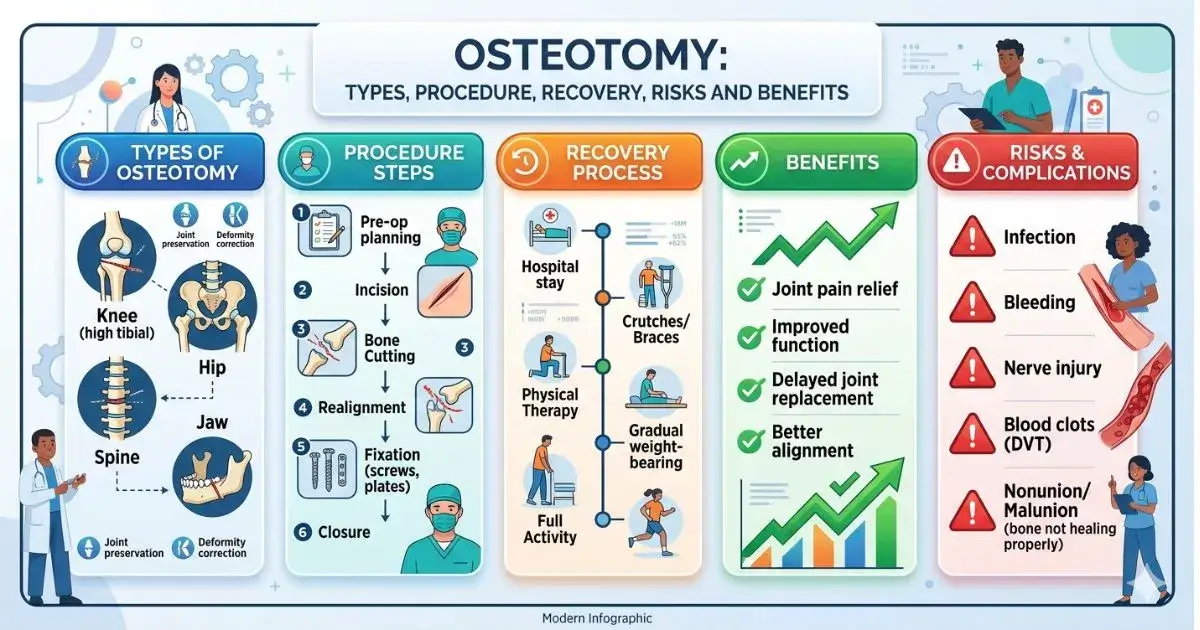
High Tibial Osteotomy
This is one of the common forms of osteotomy. It involves the shinbone, below the knee. The surgery is done when one side of the knee joint is worn out from arthritis. The angle of the tibia helps to bring your weight away from the affected part of the knee. This can significantly reduce your pain. Improve your walking.
Femoral Osteotomy
This procedure involves the thigh bone. It is often used to correct alignment issues in the hip or knee. For example if the femur is angled incorrectly it can affect how your weight passes through the joint. Correcting this alignment improves function and reduces stress on the cartilage.
Hip Osteotomy
This is a procedure used to correct hip dysplasia or structural problems. The repositioning of the hip socket is performed to support the ball of the joint more fully. This improves stability. Reduces long-term joint damage.
Jaw Osteotomy
This type of osteotomy is done on the jaw. It is used to correct bite problems, asymmetry or breathing issues like sleep apnea. Unlike types of osteotomy this procedure is not about weight-bearing joints but about function and facial structure.
Who Is a Candidate for Osteotomy?
Not everyone with joint pain needs osteotomy. You may be a candidate for osteotomy if:
- Young and active individuals
- Moderate joint damage
- Alignment-related issues
- Presence of healthy cartilage
- Desire to delay joint replacement
On the other hand if the joint is severely damaged a replacement may be more suitable. Doctors usually assess this using X-rays, physical examination and your activity level.
Osteotomy vs Joint Replacement: Key Differences
This is a point of confusion. Osteotomy preserves your joint. Joint replacement replaces it with an one. Here is a simple way to compare:
- Osteotomy: Preserves and realigns the natural joint
- Joint Replacement: Replaces the joint with an artificial implant
Osteotomy is often preferred for younger patients because it allows them to stay active without an artificial implant. Joint replacement is more common in patients with advanced arthritis.
How to Prepare for Osteotomy Surgery
Preparation is a part of the process. Your doctor may advise:
- Blood tests and imaging
- Stopping certain medications
- Pre-surgery strengthening exercises
- Arranging post-surgery support
It is also helpful to prepare for the recovery phase. Osteotomy is not a surgery it is a recovery journey that requires patience.
Step-by-Step Osteotomy Procedure
While details vary depending on the type the general steps are similar.
- Administration of anesthesia
- Incision to access the bone
- Bone is cut at a specific angle
- Bone is repositioned
- Fixation using plates, screws, or rods
- Closure of incision
The surgery usually takes a hours depending on the complexity.
Recovery After Osteotomy
Hospital Stay
Most patients stay in the hospital for a days. Pain is managed with medication. Doctors monitor healing and early movement.
Rehabilitation and Physiotherapy
Physiotherapy starts early. You will learn how to move use support like crutches and gradually restore strength. Exercises focus on improving range of motion preventing stiffness and building muscle strength. Consistency is key here.
Return to Daily Activities
Returning to life takes time. Walking with support may last weeks. Full weight-bearing is usually gradual. Daily activities return slowly over a months. Most people resume activities within 3 to 6 months though full recovery can take longer.
Risks and Complications of Osteotomy
- Infection
- Blood clots
- Delayed healing
- Nerve or blood vessel injury
- Hardware irritation
- Residual pain or stiffness
These risks are not common but they are important to understand. Following advice and rehab protocols reduces these risks significantly.
Benefits of Osteotomy Surgery
- Preserves natural joint
- Reduces pain
- Improves alignment and mobility
- Delays or avoids joint replacement
- Supports active lifestyle
Success Rate of Osteotomy
Osteotomy has a success rate when done for the right reasons. Many patients experience pain relief and improved function. In knee osteotomy for example benefits can last years before a joint replacement is needed. Success depends on:
- Proper patient selection
- Accurate surgical technique
- Consistent rehabilitation
Cost of Osteotomy Surgery
The cost of osteotomy varies depending on location, hospital and complexity. In India the cost is generally more affordable compared to countries. It can range from moderate to high depending on the procedure and implants used. Globally costs are higher due to hospital and surgical fees. Factors affecting cost include:
- Type of osteotomy
- Hospital facilities
- Surgeon expertise
- Rehabilitation requirements
Frequently Asked Questions
Q1. Is osteotomy painful?
The surgery itself is not painful because it is done under anesthesia. After surgery some pain is expected,. It is managed with medication and improves over time.
Q2. How long does recovery take?
Initial recovery may take a months. Full recovery, including strength and normal movement can take 6 months or more.
Q3. Is osteotomy permanent?
Yes the bone correction is permanent. However the long-term outcome depends on how the joint adapts and how you maintain your health.
Conclusion
An osteotomy fixes the real cause of your joint pain. This surgery saves your natural bone instead of using a metal part. It is not always the best path for every patient. For the right person, it offers a real way to stay active and lower pain. It helps you put off a full joint replacement for many years. You must know what to expect and work hard to heal. Ask your doctor if this plan fits your current life. You can schedule a consultation with us to discuss your concerns.