
Contents
- The Convenience Tax: Delivery Apps and Meal Prep Services
- The Supplement Overload: Quality vs. Quantity in Recovery Aids
- Gadgets and Gear: Measuring, Monitoring, and Maintenance Tech
- Integrating Recovery Costs into a Sustainable Financial Plan
- Reclaiming Control Over Your Recovery Budget
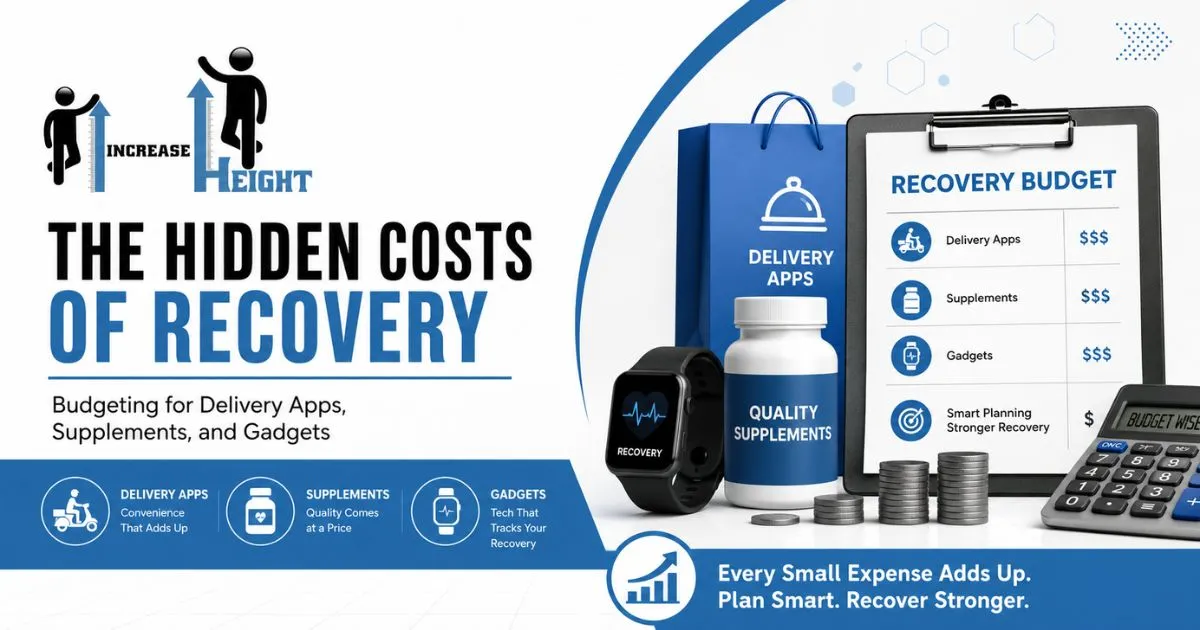
You finish a brutal workout, check your fitness tracker, and feel a surge of pride. Then, the financial reality sets in. Your bank account is sweating more than you are because of the hidden costs of recovery. We live in an era where optimizing health is a status symbol. Biohacking and post-workout care can promise you better workouts, but they can also cause uncontrollable cost. You may not notice it at first, but the total cost of convenience fees, pill bottles, and tech upgrades can eat away at your savings. This article exposes where your money goes and provides a clear framework to keep your recovery habits and your bank account healthy.
The Convenience Tax: Delivery Apps and Meal Prep Services
Clean, rich in nutrients fuel is also a source of high-priced convenience. We justify these extra costs as investments in our health, but the numbers never add up in our favor.
The Subscription Creep of Prepared Meals
Weekly meal services and grocery delivery apps are built on the promise of saving you time. In reality, they act as a tax on your fitness routine. For someone managing the long-term recovery cost for limb lengthening surgery, these platform fees and delivery tips can be a significant drain on resources that should be allocated toward clinical rehabilitation. If you pay a 99 rupee delivery fee twice a week, you will have spent over 50,000 rupees on extra costs alone by the end of the year.
To prove it, do the following simple test. For one month, calculate the true cost per meal by adding the delivery and tips to your grocery bill. Compare this with the cost of buying these same ingredients in a store. You will likely discover that the “convenience” you get at the grocery store is more than 30 to 50% more expensive.
Late-Night Recovery Snacking and Hydration
Apps turn impulse purchases into a frictionless experience. You finish a late workout, feel hungry, and open an app. A container of electrolyte powder or a few protein bars might seem like a small charge, but these platforms often inflate the base price of staple recovery items compared to retail prices. You might pay 300 rupees for a single protein bar on a delivery app that would cost 150 at a local grocery store or 120 if bought in a bulk box online. This impulse spending creates a cycle where you overpay for basic needs simply because you are tired and looking for immediate comfort.
Avoiding the Convenience Trap: Strategic Batching
You do not need to quit delivery apps, but you must limit them. Set a hard limit for your monthly delivery budget. If you hit that cap by the third week, you stop using the app. Prioritize in-person grocery runs for your primary nutritional needs. Spend one hour on Sunday prepping your post-workout meals. This simple act of planning makes the "emergency" orders unnecessary and keeps your money in your pocket.
The Supplement Overload: Quality vs. Quantity in Recovery Aids
The supplement industry firmly believes that a pill or a powder can change your basic habits. Many supplements work, but are expensive placebos that offer small returns for the average person.
Decoding the "Magic Bullet" Marketing Claims
Marketing teams are good at making you think getting over a hard workout is a puzzle only they can solve. They want you to believe in their special pills or powders. You see high-dose collagen drinks or weird herbs that cost way too much money for what they are. Look at your own habits first. Dietitians will tell you that eating actual food with enough protein works better than some hyped-up mix in a plastic tub. Most of us just need a decent meal and a good night of sleep while keeping our bodies moving. Your body does not need a shelf full of expensive bottles that do not have proof to back them up. Ignore the ads and stick to the basics.
The Cost of Purity: Third-Party Testing Fees
Quality control is the one area where spending more is actually smart. Good companies pay for extra tests from groups like NSF Certified for Sport or Informed Sport because they want to make sure no banned drugs or bad stuff end up in the bottles you buy. This work costs a lot of money, and that is why you see higher prices on the shelf. You should just buy one bottle of the good stuff. Getting five cheap bottles from a random website is a waste of money because you never know what is actually inside those pills. When the recovery cost for limb lengthening surgery is already on your horizon, purchasing one reliable, tested supplement is a much smarter financial decision than gambling on cheap, potentially harmful products.
Minimizing Waste: Cycling and Audit Your Inventory
Walking to your pantry right now and looking at your supplement shelf. How many bottles are half-full and collecting dust? Supplement hoarding is a silent budget killer. Check your inventory every three months. If you haven’t used a supplement in the past 30 days, stop buying it. Stop buying supplements that don’t provide much benefit and keep your supply fresh so you don’t throw out expired, expensive product.
Gadgets and Gear: Measuring, Monitoring, and Maintenance Tech
Technology provides you with looping updates that can feel necessary for your progress. But there’s a difference between a useful tool and an expensive toy.
Wearable Tech: The Annual Upgrade Cycle
Most tech companies try to make you feel like your old watch or ring is trash once the new one comes out. Brands release new stuff every year with tiny fixes to the battery or the sensors, even though the old one is fine. This one tiny change in how the device tracks your heart at night won’t make you die, and it certainly won’t make you sleep better or run faster tomorrow. Most trackers can last four years. Still, people toss them after eighteen months just to get the newest model. You save hundreds of dollars by just ignoring the ads. If your gear still works, keep using it. Stop wasting money.
Recovery Hardware: Compression Boots and Massage Guns
High-end recovery gear like pneumatic compression boots or professional-grade percussion guns are significant capital investments. They can cost thousands or even lakhs of rupees. Compare this to the cost of professional bodywork. A 10000 Rs set of boots is the price of ten professional massage sessions or physical therapy visits. If you are not a high-level athlete, a set of massage balls or a foam roller provides 90% of the benefit for a tiny fraction of the cost. Only buy the expensive hardware if you have a specific, recurring injury that justifies the investment.
Maximizing Existing Assets: Maintenance Over Replacement
Budgeting for gadgets allows you to use them longer. Most people stop using a device when it gets dirty, the battery dies, or the app stops working. Follow this maintenance guide for your equipment. Clean the sleeves on your compression boots regularly to prevent damage. Make sure you have the latest software updates on your phone to keep your wearable technology connected. Simple care prevents early replacement and ensures you get your money’s worth out of the hardware you already own.
Integrating Recovery Costs into a Sustainable Financial Plan
If you treat recovery as a "nice to have," you will always overspend on it. Treat it as a planned expense to gain control.
Creating the "Wellness Buffer": A Line Item for Optimization
Move recovery spending from an impulse category to a fixed one. Create a "Wellness Buffer" in your monthly budget. Dedicate a set amount of money that will never be changed to buy things for you that have to do with your health. If you are saving for the recovery cost for limb lengthening surgery, this buffer must be strictly defined. If you want a new supplement or tech item, it has to come out of this bucket. If you don't have it in the bucket, you don't buy it. Replacing emotional spending with a conscious choice takes the financial stress out of your budget.
Prioritization Matrix: Needs vs. Wants in the Recovery Stack
Organize your spending into a simple tier system to identify where your money should go:
- Tier 1: Essentials: Quality sleep environment (blackout curtains, pillows), hydration, and staple groceries. Spend the most here.
- Tier 2: Core Optimization: High-quality protein powder, tested vitamins, and basic gym equipment.
- Tier 3: Luxury/Niche Tech: High-end compression boots, smart rings, and fad supplements. Only spend here if Tiers 1 and 2 are fully funded.
The True Cost of Time: Valuing Non-Monetary Recovery
The most effective recovery tools are often free. Stretching, deep breathing, going for a walk, and having a bedtime routine are free. You do not need gadgets or supplements to "fix" your fatigue. Value your time as an asset. Spending 20 minutes on recovery movement is often more effective than 20 minutes spent scrolling through a shopping app looking for a quick fix.
Reclaiming Control Over Your Recovery Budget
Optimization is helpful, but it should not compromise your financial peace. You do not need to buy your way to a better recovery. By cutting out unnecessary delivery fees, auditing your supplement shelf, and resisting the urge to upgrade your tech every year, you can lower your stress and keep your budget in the green.
Take these three steps today to reset your financial habits:
- Audit your last month: Add up all delivery fees and impulse snack purchases. Use that number as your new monthly "delivery cap," and redirect the savings toward the recovery cost for limb lengthening surgery.
- Clean your pantry: Throw away expired supplements and write down the ones you actually use.
- Freeze your tech spends: Stick with your current wearable device for at least another year (no matter what comes out next).