
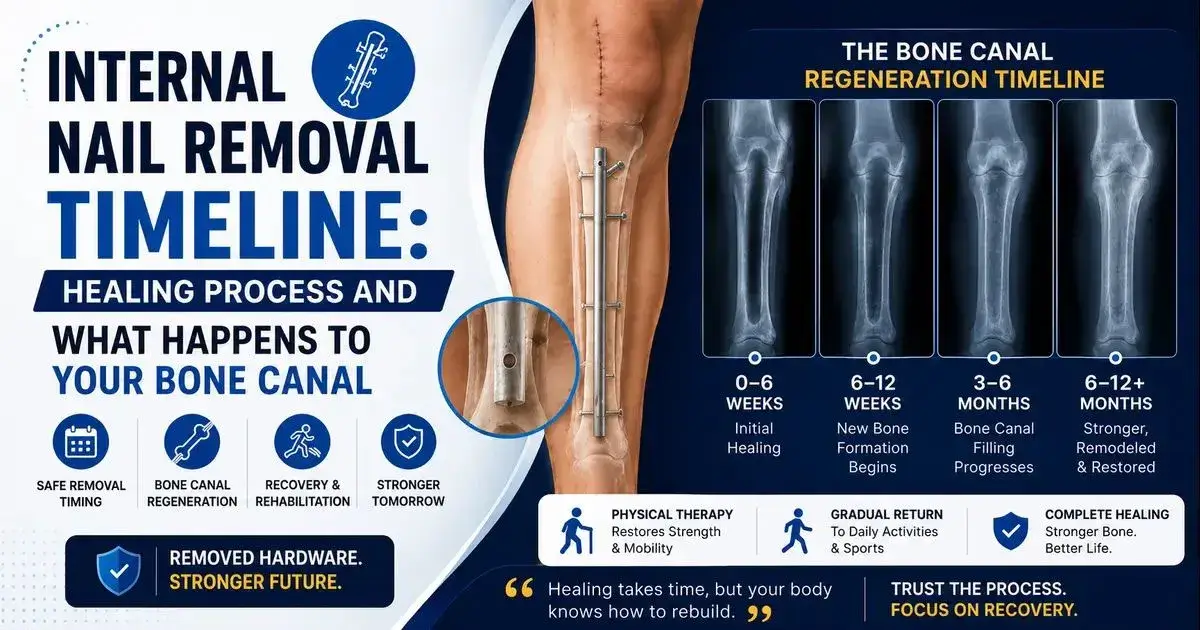
Fixing a broken bone with a metal rod - that part most people understand. What comes after, once the bone heals and the hardware needs to come out, is where patients tend to have more questions. You start to worry about having that hardware inside you forever. Patients often ask how long the surgery takes and, more importantly, how their bone recovers once the metal comes out. This guide breaks down the timeline for internal nail removal and the biological repair of your bone canal.
When Internal Nail Removal is Scheduled: Indications and Timing
You cannot just walk into a clinic and demand your hardware be removed. Your surgeon needs evidence the bone can manage on its own. No one schedules this based on a gut feeling.
Criteria for Safe Removal: Confirmed Fracture Union
Fracture union is when the broken ends have grown back into one continuous structure. X-rays are how the surgeon confirms that bridge has formed. When those images are hard to read, a CT scan fills in the gaps. Six to 18 months is the general window before a surgeon will consider removal. Where you fall in that range comes down to the specific bone and the severity of the original injury, both of which dictate the ultimate success of your medullary canal regeneration recovery.
Non-Union and Pain-Related Removal Triggers
Sometimes, the hardware causes problems. Hardware can rub against soft tissue, and that friction causes pain. An active infection is another trigger. When either situation comes up, the nail comes out regardless of where the bone is in its healing.
The Importance of Surgeon Assessment in Scheduling Removal
Your surgeon will decide when it's time. They'll review your pain levels, imaging results, and daily function. High-impact activity stays off the table until they say otherwise. Remove the nail before the bone is ready and re-fracture becomes a genuine risk.
The First Week After Removal
The procedure for removing a nail is usually faster than the initial surgery. A small incision is all it takes to reach the nail ends. Shorter time on the operating table doesn't mean your body skips the recovery response.
Incision Healing and Initial Pain Management
Some soreness at the entry site is expected. Over-the-counter pain relief covers it for most people, though a short prescription is sometimes given. Keep the bandage dry and clean. Any spreading redness or warmth should be reported to your doctor immediately.
Early Weight-Bearing Status Post-Removal
Your weight-bearing rules change after internal nail removal. Weight-bearing often resumes faster after removal than it did after the original fracture. A few days on crutches are still common while the bone adapts to functioning without internal support.
Post-Surgical Swelling and Stiffness
Swelling is common after surgery. The procedure disturbs surrounding tissue, which triggers a fluid response. You may also experience stiffness in nearby joints. Elevation and gentle movement help manage symptoms and prevent long-term stiffness.
The Bone Canal Regeneration Timeline: Filling the Void
This is the part most patients worry about. You might imagine a hollow tube inside your leg once the metal is removed. Fortunately, your body is designed to handle this process naturally.
How the Bone Canal Fills In
A channel runs through the center of every long bone called the medullary canal. When the nail is removed, bone-producing cells begin creating new tissue inside the canal. This tissue forms a callus, gradually filling the space left behind.
Standard Radiographic Milestones for Canal Regeneration
Initially, X-rays show a dark area where the nail once existed. Over time, a hazy shadow appears as new bone develops. Eventually, the canal becomes denser and resembles the surrounding bone structure.
How Long Until the Bone Canal is Structurally Sound?
For most patients, the canal begins filling with strong bone within 3 to 6 months. By this stage, the most vulnerable phase of medullary canal regeneration recovery is generally complete. Everyday activity helps stimulate the bone remodeling process and improves strength over time.
Long-Term Functional Recovery After Nail Removal
Bone regeneration is only one aspect of recovery. Muscles and joints also require rehabilitation after months of adapting to internal hardware.
Regaining Strength and Range of Motion (ROM)
Muscle weakness around the previous hardware site is common. Physical therapy focuses on rebuilding strength and restoring flexibility. Consistency is more important than intensity. Regular exercise over weeks produces better results than occasional strenuous sessions.
Managing Persistent Symptoms (Aches and Numbness)
A mild ache may persist for several months as tissues adapt. Temporary numbness around the surgical scar is also common because small nerves beneath the skin require time to recover.
Return to High-Impact Activities and Sports
Activities such as running, jumping, and heavy lifting place significant stress on healing bone. Most surgeons require imaging confirmation of complete remodeling before clearing patients for these activities. Six months post-removal is a common minimum timeline.
Factors Influencing the Overall Healing and Removal Timeline
Patient Variables: Age, Nutrition, and Comorbidities
Smoking significantly reduces blood flow to bone and slows healing. Conditions such as diabetes and vitamin D deficiency can also delay recovery. Adequate intake of calcium and protein provides the raw materials needed for bone regeneration.
Fracture Complexity and Initial Surgical Technique
Patients with complex fractures or those requiring bone grafts often need a longer timeline before hardware removal is considered safe. Greater initial trauma typically requires more cautious management throughout recovery.
Early vs. Delayed Removal Decisions
Hardware removed around 6 months may be easier to extract. Delayed removal can allow bone tissue to grow around the nail, increasing the complexity of extraction. Both approaches require careful planning and individualized assessment.
Conclusion
Internal nail removal is a standard final step in the treatment of many bone injuries. While basic recovery often takes only a few weeks, the biological process of filling and strengthening the bone canal continues for several months.
Physical therapy, proper nutrition, and regular follow-up appointments are essential for a successful recovery. Every patient heals at a different pace, but with the right conditions, the body's natural healing process is remarkably reliable.