
Contents
- Understanding the Phases of Limb Lengthening Recovery
- When Does Physical Sensation Start Shifting?
- The Long Haul: Functional and Lifestyle Normalcy
- Factors That Significantly Alter Limb Lengthening Recovery Time
- Conclusion: Defining "Normal" Post-Limb Lengthening
You just woke up from limb lengthening surgery and your leg or arm feels like a stranger’s. The pain hits hard, and the thought of crutches for months scares you. Many patients worry about this part most. Studies show limb lengthening recovery time takes one to two years for full normalcy. But "normal" shifts as you heal. It starts with basic steps and builds to running again.
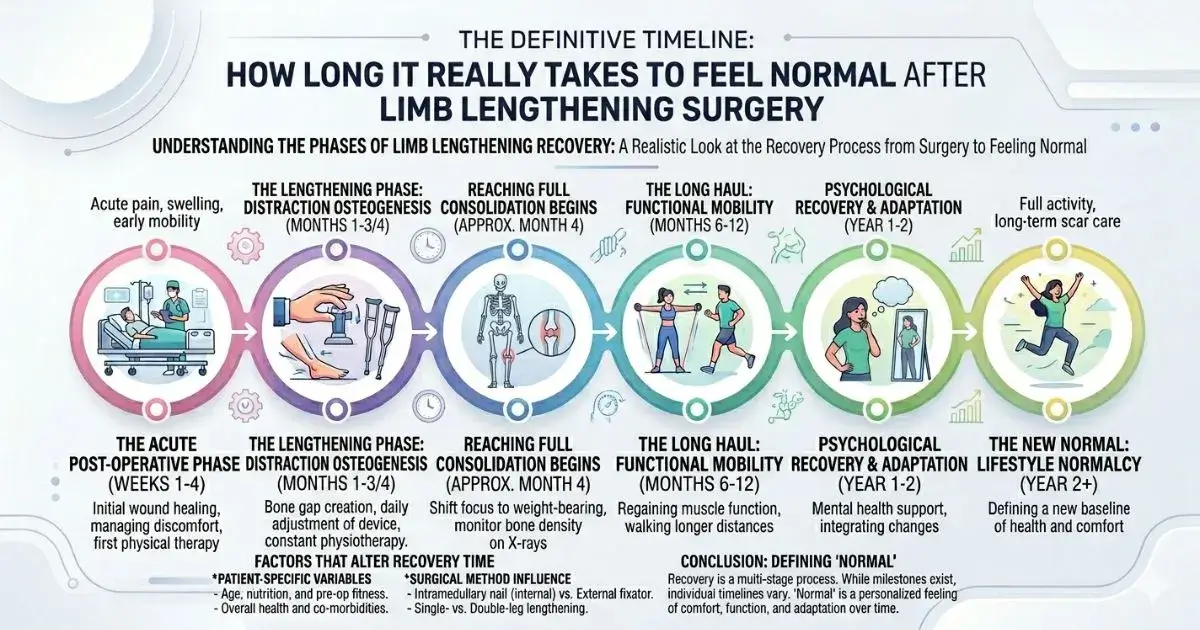
This journey has clear stages. First, you manage sharp pain right after surgery. Then comes the lengthening phase with daily tweaks. Next, bones harden while you rebuild strength. Finally, you ease back into daily life. We'll break it down step by step. Expect ups and downs, but most folks see big changes in the first year.
Understanding the Phases of Limb Lengthening Recovery
Recovery from limb lengthening follows a set path. It matches methods like PRECICE or LON. Each step builds on the last. You can't skip ahead. Let's look at the early days.
The Acute Post-Operative Phase (Weeks 1–4)
Pain and swelling rule the first weeks. Your body fights to heal the cuts and fix the bone. Doctors keep you off the leg or arm fully. This phase sets the tone for your total limb lengthening recovery time.
Rest helps, but movement starts slow. Swelling peaks around day three. Ice packs and elevation cut it down. Most patients need help for basic tasks like dressing.
Initial Pain Management Protocols and Medications
Pain meds kick in right away. Opioids handle the sharp bursts at first. Then, you switch to milder ones like ibuprofen. Nerve pain can linger, feeling like pins and needles. Gabapentin often eases that sting. Doctors watch doses to avoid side effects. Stay on track, and the worst fades by week two.
Some feel nausea from pills. Hydrate well. Talk to your team if pain spikes. They adjust fast.
Non-Weight Bearing Restrictions and Mobility Aids
No weight on the limb means crutches or a wheelchair. You learn to hop or roll around. It's tough on your arms and core. Dependence hits hard mentally. Friends or family step in for rides and chores.
This setup lasts four weeks. Practice shifts in bed to avoid sores. Upper body strength grows here. It preps you for later steps.
The Lengthening Phase: Distraction Osteogenesis (Months 1–3/4)
Bones start to grow now. You turn a device daily to pull them apart. Just one millimeter a day. It's slow but steady. Pain mixes with progress. This phase tests your grit.
Infections stay low with clean care. Soft tissues stretch too, causing pull. Your weight bearing progression is strictly limited during this phase to protect the fragile new bone. Physical therapy starts light to keep joints loose.
Daily Adjustments and Pin/Port Site Care
For external fixes like Ilizarov, you clean pins daily. Internal ones like PRECICE need less fuss, but check for redness. Turn the knob four times a day. Miss it, and growth stalls.
Infection signs include heat or pus. Report them quick. Most avoid trouble with routine checks.
Managing Tightness: Soft Tissue vs Bone Pain
Muscles scream from the stretch. It's different from bone aches, which feel deep. Nerves tingle as they adjust. PT helps with gentle pulls and heat packs. Do sessions three times a week.
Bone pain eases as new tissue forms. Soft tissue tightness peaks mid-phase. Stretches build tolerance. You feel looser by month three.
When Does Physical Sensation Start Shifting?
Sensations change as lengthening ends. Tingles give way to solid feels. But full normalcy takes time. Bones need to fill in strong.
This shift marks hope. You sense your body's new shape.
Reaching Full Lengthening: Consolidation Begins
Lengthening stops at your goal height. Now bones consolidate. Hardware might come off around month six for externals. Internals stay put longer.
X-rays show density. When bone looks solid, weight bearing ramps up. This milestone in your limb lengthening recovery time lifts spirits. No more daily turns.
The Role of Bone Density Scans
Scans check bone strength every few weeks. DEXA tests measure minerals. Doctors look for even healing. Weak spots mean more wait time.
Most hit full length in three months. Consolidation adds three to six more. Follow-up visits confirm progress.
The Return of Normal Sensory Input
Nerves heal last. Stretching them causes odd feels. Full return can take six to twelve months. Skin and muscles reconnect. This sensory return is crucial as your weight bearing progression moves toward total independence. You notice less numbness over time. Daily life feels steadier.
You notice less numbness over time. Daily life feels steadier.
Nerve Recovery Timelines
Peripheral nerves recover at one millimeter a day post-stretch. Full function hits around nine months for many. Some tingling sticks for a year. PT with nerve glides speeds it.
Managing Muscle Weakness and Atrophy
Muscles shrink from disuse. PT rebuilds them with weights and bikes. Start at month two, build to daily. Weakness fades by month eight.
Atrophy hits quads hard in leg cases. Targeted exercises fix it. Strength returns step by step.
The Long Haul: Functional and Lifestyle Normalcy
Basic walking comes around month six. But normal means more. Sports, stairs without thought. This part blends body and mind.
Expect steady gains. Set small goals.
Regaining Full Functional Mobility (Months 6–12)
You ditch aids by month nine often. This 100% weight bearing progression allows walks to turn to jogs. Coordination sharpen with balance work. Full mobility lands at one year for most. Daily tasks feel easy again. No limp.
Daily tasks feel easy again. No limp.
Reintegrating High-Impact Activities
Surgeons clear running at nine months if bones heal well. Jump at twelve. Sports like soccer wait longer, up to two years. Risk of breaks drops with strong PT.
Build slow. Test limits under guidance.
Physical Therapy Intensity Adjustment
Early PT is every other day, two hours. By month six, it's twice weekly. At year one, you do home routines. Maintenance keeps gains.
Therapists tailor plans. Stick to them.
Psychological Recovery and Body Image Adaptation
Mind heals slower than body. New height changes how you see yourself. Clothes fit odd at first. Confidence builds as movement flows.
Talk therapy helps some. Peers share stories online.
Addressing Phantom Sensations
Aches linger like echoes. Phantom pulls from stretched areas. They fade in six months. Heat and massage soothe.
Most call it minor by year two.
Return to Self-Perception
Adjustment takes three to six months mentally. You own the change. Some feel taller pride right away. Others need time to match body to brain.
Elective surgery brings mixed feels. Support groups speed acceptance.
Factors That Significantly Alter Limb Lengthening Recovery Time
Not everyone heals the same. Your habits and health play big roles. Know what sways the timeline.
Surprise factors pop up too.
Patient-Specific Variables Impacting Healing Speed
Age slows things past forty. Young bones mend faster. Health matters - smokers heal slower by weeks.
Diet fuels repair.
Age, Overall Health, and Nutritional Status
Teens recover in under a year often. Adults hit two years full. Diabetes delays by months. Vitamin D and calcium boost bone growth.
Eat greens and dairy. Supplements help if low.
Compliance with Physical Therapy and At-Home Protocols
Skip PT, and weakness lasts. Do it all, gain months. Home stretches daily cut tightness fast.
Consistency wins. Track your sessions.
Surgical Method Influence on the "Normal" Timeline
Methods differ in hassle. Internals let you move more. Externals mean more care but quicker removal.
Internal Fixation (e.g., PRECICE) vs. External Fixation (e.g., LON, Ilizarov)
PRECICE hides inside, so showers stay easy. Walk sooner, normal by ten months. LON mixes both, mid-range recovery at eleven months. Ilizarov pins slow mobility but costs less.
Internals cut infection risk. Externals need diligent cleaning.
Conclusion: Defining "Normal" Post-Limb Lengthening
Limb lengthening recovery spans phases from pain to power. Acute weeks pass quick with meds. Lengthening demands focus for months. Consolidation brings relief. Full normal hits at one year, with tweaks to two.
"Normal" means walking free, no aids. It grows to sports and self-assurance. Your path varies, but progress builds.
- Acute Pain:Managed within the first month. Meds and rest handle it.
- Lengthening Phase: Requires dedication for 2-4 months. Daily care keeps it smooth.
- Functional Normalcy:Often achieved around 12 months, with fine-tuning continuing for up to 2 years. PT drives it home.
- Tip: Prioritize consistency in physical therapy over speed. It shortens the wait.
Talk to your doctor for your plan. Start PT early. You'll feel normal again - stronger even. Reach out to support if doubts creep in. Your new self awaits.