
Contents
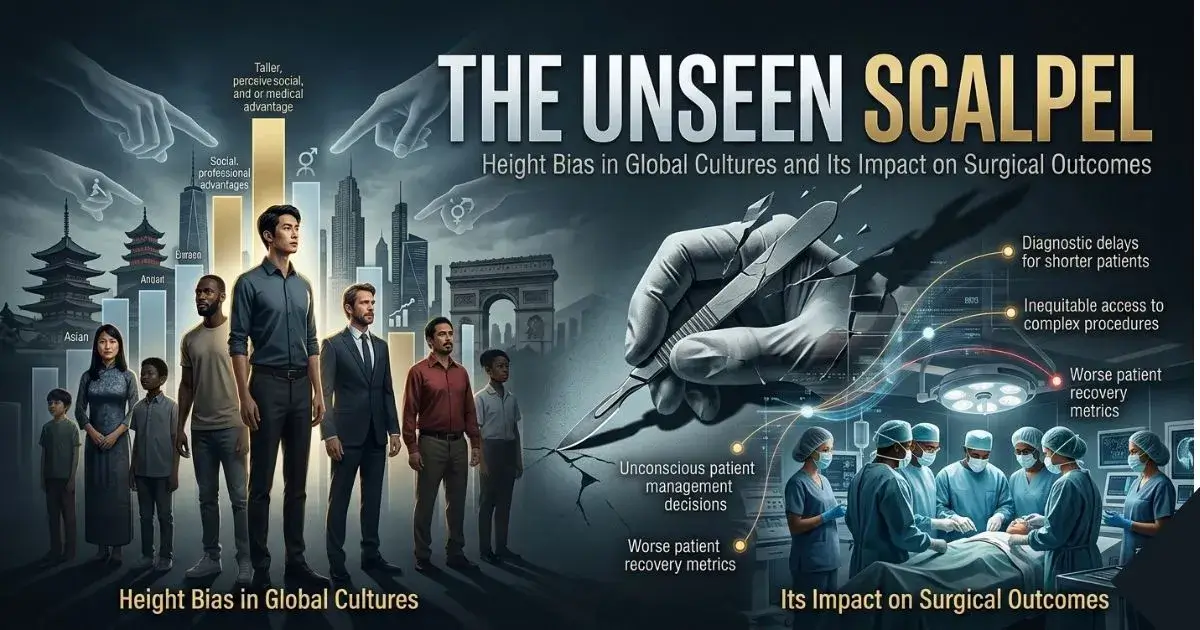
- The Unseen Scalpel: Height Bias in Global Cultures and Its Impact on Surgical Outcomes
- Defining Height Bias and Its Cultural Roots
- What is Height Bias (Stature Discrimination)?
- Cross-Cultural Variations in Height Perception
- The Role of Media and Historical Context
- Manifestations of Height Bias in Healthcare Seeking Behaviour
- Patient Comfort and Communication Disparities
- Triage and Diagnostic Thresholds Influenced by Stature
- Height Bias in Elective Procedures (Aesthetic and Orthopedic)
- Direct Impact on Surgical Planning and Post-Operative Outcomes
- Anesthesia and Airway Management Challenges
- Orthopedic Surgery Specifics: Implant Sizing and Fit
- Complex Soft Tissue and Trauma Surgery
- Measuring Disparities in Surgical Success Rates
- Reviewing Outcomes Data Across Global Cohorts
- The Socioeconomic Overlay: Height, Income, and Access to Specialized Care
- The Concept of "Standard Patient" Bias in Clinical Trials
- Mitigating Height Bias in Clinical Practice
- Implementing Technology for Objective Sizing and Dosing
- Educational Reforms for Surgeons and Medical Trainees
- Standardizing Equipment and Operating Room Ergonomics
- Conclusion: Moving Beyond Surface Level
The CEO rose to the podium, commanding the room with his tall stature. Tall
leaders frequently garner up to 20% higher salaries. But, men below average
height often faces closed doors across global boardrooms. Height bias shapes
lives in quiet ways, often reinforcing assumptions about social class and
height that extend beyond the workplace.
This article digs into how deep-rooted views on stature affect medical care.
We see it in surgical results, where cultural norms clash with clinical
needs. Across the globe, shorter or taller patients might face uneven odds
in the operating room.
We'll first unpack height bias and its cultural ties. Then, we'll look at
how it plays out in healthcare choices. Next comes its direct hit on surgery
plans and recovery. We'll measure the gaps in success rates. Finally, we'll
cover steps to fix it. By the end, you'll grasp why addressing this matters
for fairer health outcomes.
Defining Height Bias and Its Cultural Roots
Height bias, or stature discrimination, goes past picking favourites. It
ties into our brains linking tall bodies to power and smarts. Think of it as
an old instinct from hunter-gatherer days, where bigger meant stronger, and
status often aligned with social class and height.
In hiring, short folks often get overlooked for key roles. A study from the
University of Groningen found men under 5'9" earn less on average. This
physical bias in hiring spills over, affecting self-worth, health choices,
and long-term outcomes shaped by social class and height.
Psychology of height shows we trust taller people more with decisions. It's
not fair, but it sticks. Shorter individuals report higher stress from
constant judgment.
Cross-Cultural Variations in Height Perception
Views on height shift by culture. In the U.S., tall men link to success in polls from Gallup. But in Japan, harmony trumps size; leaders focus on group fit over stature.
African tribes like the Maasai prize tall warriors for protection roles. In contrast, some Latin American spots value compact builds for agility in daily work. Research from the Journal of Cross-Cultural Psychology backs this, noting collectivist societies downplay height for social bonds instead of tying status to social class and height.
These differences shape biases. Western ads push tall ideals, while Eastern media mixes in diverse heights. Understanding this helps spot global patterns in care gaps.
- Western cultures: Height signals leadership and wealth.
- Collectivist groups: Stature takes a back seat to community roles.
- Indigenous views: Often tie height to survival skills, like herding or farming.
The Role of Media and Historical Context
Media amps up height norms. Hollywood casts tall actors as heroes, from
Superman to Bond. Ads in Europe show tall models as confident buyers. This
reinforces stature discrimination and strengthens stereotypes linking social
class and height.
History adds layers. In ancient Egypt, pharaohs depicted as giants showed
divine rule. Medieval knights prized height for battle reach. These tales
linger, making short people seem less noble.
Today, social media challenges old views. Short influencers share success
stories, pushing back. Yet, in places like India, Bollywood still favours
tall leads, keeping biases alive.
Manifestations of Height Bias in Healthcare Seeking Behaviour
When a doctor towers over a short patient, trust can wobble. The patient
might feel small, dismissed in talks. This hurts open chats about symptoms
and mirrors the power dynamics seen in height discrimination in the
workplace.
Tall patients facing average-height docs report similar issues. They worry
docs won't grasp their full pain. A survey in the British Medical Journal
noted lower adherence to advice in mismatched pairs.
Real cases show it. A short woman ignored her back pain, thinking the tall
surgeon saw her as weak. Better training on body talk could bridge this.
Triage and Diagnostic Thresholds Influenced by Stature
Emergency rooms use quick checks, but height sneaks in. BMI bias hits short
folks hard; their scores skew high, flagging false obesity risks. This leads
to wrong tests or delays.
For tall patients, imaging setups assume average frames. Scanners might not
capture full spines, missing breaks. Standardized medical dosing errors rise
too, based on weight guesses tied to height.
Docs need height-aware tools. One clinic cut errors by adding stature logs
to intake forms. It speeds right care and reduces disparities linked to
social class and height.
Height Bias in Elective Procedures (Aesthetic and Orthopedic)
People seek limb lengthening surgery for confidence boosts, driven by cultural tall ideals. In South Korea, these surgeries boom from media pressure. But risks like nerve damage loom.
Orthopedic choices shift too. Short patients push for early knee fixes, fearing bias in wait times. Surgeons might judge tall ones as tougher, delaying hip aids.
- Cosmetic fixes: Often for short adults chasing job edges shaped by height discrimination in the workplace.
- Joint work: Height sways who gets priority based on "fit" views.
Direct Impact on Surgical Planning and Post-Operative Outcomes
Tall patients face tough intubation. Their longer necks complicate tube
placement, raising breath risks. Short ones need smaller tools, but standard
kits often lack them.
Anesthesiology guidelines from the American Society warn of this. One report
showed 15% more airway issues in extremes. Proper prep, like custom masks,
cuts dangers.
Orthopedic Surgery Specifics: Implant Sizing and Fit
Joint replacements demand exacts fits. Tall frames need bigger knee parts,
but stock sizes run short. This leads to loose implants, hiking revision
rates.
Data from the National Joint Registry shows tall patients face 25% higher
redo odds. Short ones get oversized gear, causing pain and wear.
Custom implants help, but cost barriers hit. Better sourcing equals
longer-lasting fixes.
Complex Soft Tissue and Trauma Surgery
In belly ops, height alters access. Tall torsos mean deeper fields, tiring
teams. Short bodies pack tissues tight, straining repairs.
Trauma hits vary too. Tall limbs take longer sutures; mismatches pull wounds
open.
A study in Trauma Journal linked stature to 10% more infection in
extremes.
Adapting tools, like longer retractors, eases this. It boosts clean closures
and quick heals.
Measuring Disparities in Surgical Success Rates
In Asia, a Japanese review found stature correlation in morbidity for heart ops. Shorter builds faced dosing slips, upping complications by 12%. Global health systems vary, but patterns hold.
- U.S.: Height links to ortho revisions.
- Europe: Airway risks spike in tall groups.
- Asia: Dosing errors hit short patients hard.
These surgical complication rates by height demand attention.
The Socioeconomic Overlay: Height, Income, and Access to Specialized Care
Height bias curbs jobs, slashing pay. Short men earn 5-10% less, per
economic reports. This limits top-tier care for custom needs and reinforces
height discrimination in the workplace.
Wealthier tall folks snag better surgeons. Poor short patients stick with
basics, facing higher risks. It compounds health gaps.
Fixing income ties could even access. Community clinics with height tools
help bridge it.
The Concept of "Standard Patient" Bias in Clinical Trials
Trials often pick average heights, skipping edges. This skews drugs and
protocols for most folks. FDA data shows 20% exclusion for extremes.
Results? Real-world failures rise. A drug safe for 5'10" might overdose
short users. Broader trials cut this
Push for inclusive studies. It makes care fit all.
Mitigating Height Bias in Clinical Practice
3D scans map bodies exact, ditching guesses. Patient-specific tools in ortho
cut fit errors by 30%, per recent trials.
Use modeling software for doses. It adjusts for height, lowering side
effects. Clinics adopting this see smoother ops.
Tech levels the field. Make it standard.
Educational Reforms for Surgeons and Medical Trainees
Train on body diversity early. Courses challenge views of "normal" patients,
covering height variations.
Include physical bias awareness in cultural training. Role-plays build
empathy for short or tall cases. It fosters fair plans and helps future
providers recognize patterns similar to height discrimination in the
workplace.
Mandate it. New docs will handle diversity better.
Standardizing Equipment and Operating Room Ergonomics
Adjustable tables fit all heights, easing positions. Stock varied retractors
and kits for extremes.
ORs with bariatric and pediatric gear ready help. It speeds work, cuts
fatigue. Safety wins.
Push hospitals to update. It saves lives.
Conclusion: Moving Beyond Surface Level
Height bias roots deep in cultures, from Western power plays to Eastern
balance. It ripples into healthcare, skewing talks, diagnoses, and surgery
paths. We see real hits: higher risks in anesthesia, bad implant fits, and
uneven outcomes worldwide.
Data confirms it - complications climb at height edges, worsened by income
gaps and trial flaws. Yet, hope lies in tech like 3D tools, better training,
and smart gear. These steps make care blind to stature.
As patients or providers, question your views. Spot how height shapes
expectations. Demand inclusive medicine. It ensures everyone gets a fair
shot at healing, no matter their build. Let's cut this unseen bias for good.
Also Read: