
Contents
- Phase 1: Immediate Post-Surgery Adaptation and Mobility Hurdles
- Phase 2: Re-integrating the Extended Body into Household Tasks
- Phase 3: Shifting Social Interactions and Public Navigation
- Phase 4: Long-Term Maintenance and Establishing New Norms
- Conclusion: The New Equilibrium of Daily Living
Imagine standing before your mirror one day, several inches taller. But you don’t fit anymore. You dreamed of getting taller with limb lengthening surgery. You thought you would feel the boost of confidence. Yet, the real story is small things like reaching for a cup of coffee or pulling on your shoes. And the change makes your world look different than you ever thought possible.
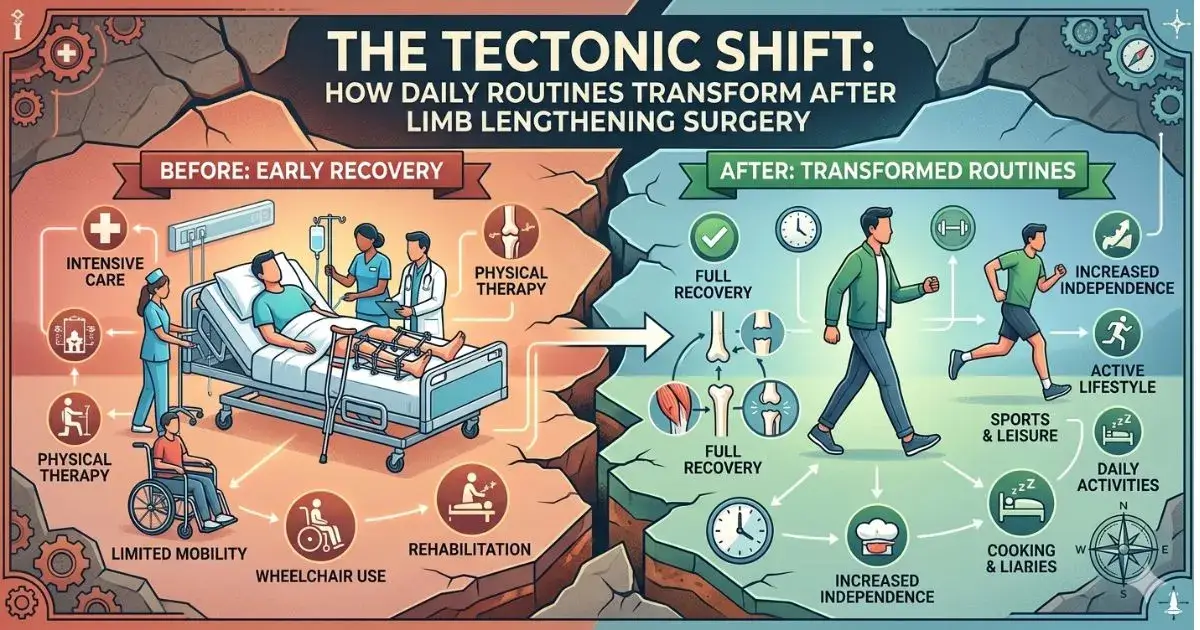
This article dives into how daily routines shift after limb lengthening. We'll explore the phases from right after surgery to long-term tweaks. From sleep issues to social surprises, your body and life will adapt to the new inches.
Phase 1: Immediate Post-Surgery Adaptation and Mobility Hurdles
Right after limb lengthening surgery, your world slows down. The procedure stretches bones in your legs or arms, often using fixators or nails. This creates a body that feels foreign, demanding fresh ways to handle basics. Recovery hits hard on mobility, turning simple tasks into puzzles.
Adjusting Sleeping Positions and Comfort
Sleep turns tricky in the early days. Your legs might stay stiff from the hardware holding bones in place. You can't curl up like before; instead, you prop pillows to keep limbs straight. Many folks use wedge pillows or hospital beds at home to ease the strain.
Pain meds help, but they don't fix the awkward angles. Over weeks, as healing starts, you experiment with side-lying or elevated setups. It's a grind, but good rest speeds up consolidation, when new bone forms.
Navigating Personal Hygiene and Bathroom Accessibility
Hygiene becomes a battle. When you are unable to bend your knees in to shower, you use a chair for the shower or a sprayer for the handheld nozzle. You sit to wash so as not to slip on wet floors. Dressing takes forever - pants slide on with help from tools like sock aids.
The toilet setup changes too. Raised seats prevent deep squats that could hurt fresh incisions. Sponges on sticks reach spots you can't twist toward. These aids, often from medical supply stores, make the routine doable. Patience pays off as flexibility creeps back.
The New Pace of Ambulation and Transfers
Walking feels like learning all over again. Crutches or walkers support your weight while bones lengthen. Each step demands focus to avoid jolts. Pre-surgery, you dashed across rooms; now, a short hall feels like a marathon.
Sitting and standing require planning. You lower slowly onto chairs, using arms for leverage. Stairs? Forget rushing - handrails become your best friend. Physical therapy guides this phase, building strength step by step. By month three, gait improves, but the caution lingers.
Phase 2: Re-integrating the Extended Body into Household Tasks
As fixators come off, you reclaim your space. But your taller frame alters home life. Counters stay the same height, while you tower over them. This phase blends frustration with fun discoveries in chores.
Kitchen Dynamics: Reaching, Bending, and Counter Heights
In the kitchen, everything shifts. Upper shelves? No ladder needed now - you grab spices with ease. But lower spots, like the veggie drawer, force deeper bends. Your longer legs make squats awkward at first, risking back twinges.
Counters hit at a new spot on your hips, not waist. Chopping veggies feels off-balance until you adjust stance. Some swap step stools for reachers early on, then embrace the height perk. Over time, you cook faster, spotting spills from afar.
Clothing Fit and Wardrobe Overhaul
Your closet rebels against the change. Pants that once fit drag on the floor; hems need chopping. Shoes might run big now, with extra space in the toes from leg adjustments. Sleeves on shirts could shorten if arms lengthened too.
Updating means shopping smart. Opt for pants with adjustable waists - they cinch without tailoring right away. Stretchy fabrics forgive the flux. By six months, a full refresh sets you up, blending style with comfort.
Driving and Vehicle Ergonomics
Getting behind the wheel tests your new build. Seats slide back farther for legroom, especially after lower limb work. Pedals feel distant; you stretch to brake without strain. Dashboard views improve - you see over it better.
Visibility perks up, spotting traffic sooner. But headroom in tight cars pinches. Wait until doc clears you, often post-fixator removal around three to six months. Test drives help tweak mirrors and seats for safety.
Phase 3: Shifting Social Interactions and Public Navigation
Out in the world, eyes follow you. Gaining height through limb lengthening surgery draws stares and comments. Friends joke about your "growth spurt," but it reshapes how you connect. Public spots test your taller self too.
Altered Perceptions in Social Settings
Chats change when you loom over the crowd. Eye contact drops; people crane necks to meet your gaze. Handshakes feel different - your reach extends farther. At parties, you spot folks across rooms, but blending in takes effort.
The mind adjusts slower than the body. You might slouch at first, hiding the height. Over time, it boosts poise, drawing positive vibes. Studies show taller folks often gain social edge, like in job talks. Yet, the sudden shift can spark self-doubt.
Navigating Public Spaces and Infrastructure
Doors that once fit now brush your head in older buildings. Subways cram your knees against seats built for averages. Airplanes? Legroom woes hit hard - bulkhead spots become must-haves. ATMs sit low, forcing bends you now rethink.
Benefits shine too. Crowds part easier; you claim overhead bins first. In stores, high shelves pose no issue. Real talk: about 70% of patients report infrastructure gripes, per recovery forums. Adapt with hats for low beams or apps for accessible routes.
Physical Activities and Exercise Regimens
Exercise restarts slow. Therapy builds base strength, focusing on balance with longer limbs. Running returns gradual - start with walks, watch for shin pulls. Sports like basketball thrill with new reach, but joints need monitoring.
Swimming eases in, low-impact on healing bones. Yoga tweaks poses for alignment. Listen to your body; overdo it, and aches remind you of changes. Most resume full activity by year one, fitter than before.
Phase 4: Long-Term Maintenance and Establishing New Norms
Months turn to years, and your taller self settles in. Routines stabilize, but tweaks keep things smooth. Posture and gear updates ensure the gains last without pains.
Updating Postural Habits and Body Mechanics
Your spine might tilt at first, compensating for leg shifts. Slumping sneaks in; stand tall to align hips. Core workouts strengthen this new frame, preventing lower back gripes.
Daily checks - like mirror poses - build awareness. Think of it as tuning a longer bike frame for smooth rides. Pros say consistent habits cut injury risk by half in limb lengthening cases.
Long-Term Implications for Footwear and Orthotics
Feet bear the load differently now. Heels might lift unevenly, calling for custom inserts. If surgery fixed leg discrepancies, old orthotics flop - get refits.
Shoes run wider or longer; brands like Brooks offer adjustable fits. Annual podiatrist visits track changes. Comfort wins, turning steps into confident strides.
The Psychological Adjustment to Height Fulfillment
The mind catches up last. Novelty fades, and you own the height. Everyday moves feel natural, spiking self-assurance. No more wishing in mirrors - you stand proud.
This shift deepens identity, blending old you with the upgraded version. Many share stories of bolder choices, from career leaps to social ease.
Conclusion: The New Equilibrium of Daily Living
Limb lengthening surgery flips daily routines upside down, from sleep tweaks to social shifts. Early hurdles in mobility and hygiene demand grit, but household tasks soon unlock perks. Public navigation and exercise evolve, leading to lasting posture and mental wins. In the end, you craft an optimized life, taller and tougher.
- Prep for Sleep and Hygiene: Stock adaptive tools like shower chairs early to ease phase one pains.
- Wardrobe and Home Hacks: Budget for clothing updates and kitchen reachers - small spends big on comfort.
- Ease Back into Activity: Follow PT closely; gradual ramps prevent setbacks in sports or drives.
- Mind the Long Game: Regular check-ins with docs keep alignment sharp for years of smooth living.
Ready to explore limb lengthening? Connect with us at Height Increase info to start your journey. Your taller tomorrow starts now.
Also Read: