
Contents
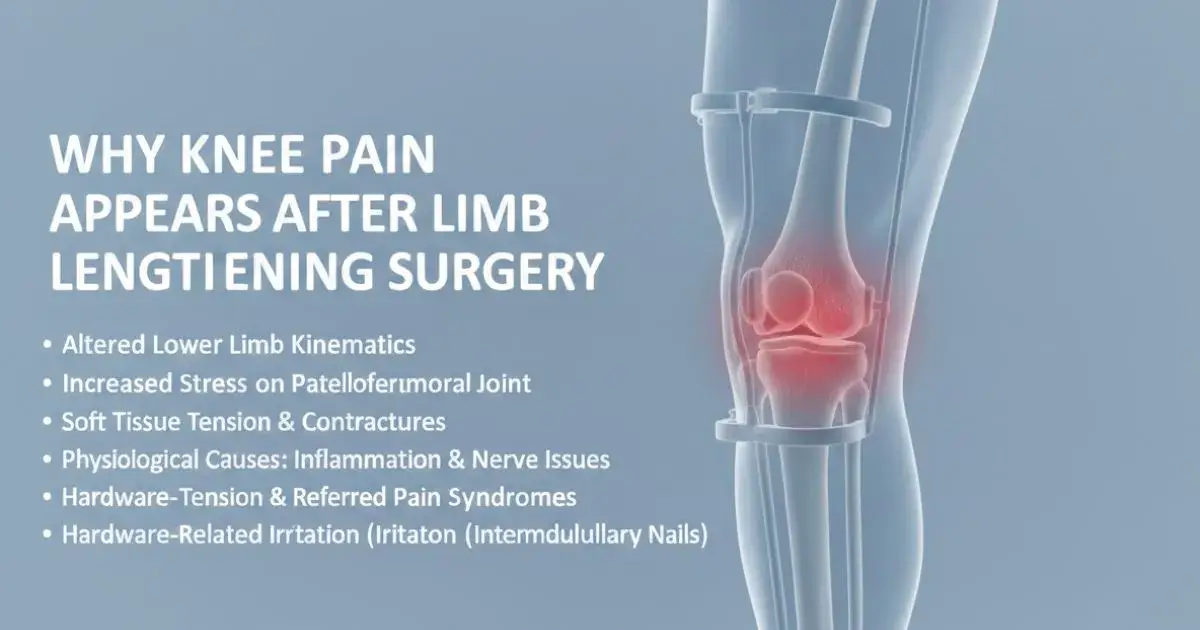
- Why Knee Pain Appears After Limb Lengthening Surgery
- Understanding the Biomechanics of Knee Loading Post-Lengthening
- Physiological Causes: Inflammation, Nerve Issues, and Hardware Influence
- Pre-Existing Conditions Exacerbated by Lengthening
- Actionable Strategies for Managing Post-Surgical Knee Pain
- Surgical Revisions and Hardware Removal Considerations
- Conclusion: Achieving Stability after Lengthening
Limb lengthening surgery can change your life. Many people seek it to fix leg length differences or boost height. You dream of walking taller with confidence. But then knee pain after limb lengthening hits hard. It sneaks up and lingers, turning excitement into frustration. This article breaks down why knee pain shows up after limb lengthening surgery. We look at body mechanics, swelling, nerve tweaks, and old issues that flare up. Plus, we share ways to ease the ache so you can heal right. The surgery uses distraction osteogenesis. Doctors cut the bone and slowly pull it apart to grow new length. It works well for many. Yet these shifts in your skeleton stresses nearby joints like the knee. Your body adapts, but not without pushback. Let's explore the main reasons behind this common side effect.
Understanding the Biomechanics of Knee Loading Post-Lengthening
Your knee takes a lot during daily moves. After limb lengthening, everything changes. Forces that once flow smooth now hit uneven spots. This leads to pain in ways you might not expect.
Altered Lower Limb Kinematics and Gait Cycle
Surgery stretches the femur or tibia. This throws off the balance between your thigh bone, shin bone, and foot. When you walk, forces travel differently up your leg. Your stride might shorten at first. Cadence picks up to keep balance. Joint angles shift too, putting extra load on the knee during each step. Think of it like adjusting a car's wheel alignment. The whole ride feels off. Studies show gait changes last months after lengthening. One review found 60% of patients alter their walk for up to a year. These tweaks overload the knee, sparking pain with every stride. You feel it most when climbing stairs or running. Over time, your body tries to fix itself. Muscles pull harder to steady things. But this extra effort tires the knee fast. If you ignore it, small strains build into big problems.
Increased Mechanical Stress on Patellofemoral Joint
The patella, or kneecap, glides in a groove on the femur. Lengthening can mess with that path. If the femur grows more than the tibia, the ratio shifts. This pulls the patella off track. Rotational tweaks from surgery add to it. You end up with lateral pull, grinding the joint. A key factor is the Q-angle. It's the line from your hip to knee to shin. Surgery can widen this angle by a few degrees. That boosts side stress on the patella. Anterior knee pain follows, sharp and nagging. Data’s from orthopedic journals links this to 40% of post-lengthening complaints. Picture the kneecap as a skate on ice. If it warps, it scrapes and slows you down. Patellar tracking issues cause swelling and clicks. Without care, it worsens over time.
Soft Tissue Tension and Contractures
Distraction pulls bones apart over weeks. Muscles, tendons, and ligaments stretch too. Not all adapt at the same speed. The hamstrings tighten in the back of the thigh. Like the rectus femoris, quadriceps come closed down in front. The calf muscles shrink, yanking the knee. This tension strains the knee capsule. The back feels pinched on bends. The front aches from constant pull. Contractures form if you don't stretch enough. They lock the joint stiff, making pain worse. You might notice it as a pull during squats. Tight tissues limit full motion. One study noted 70% of patients face muscle tightness post-op. Gentle pulls help, but ignore them and scars set in deep.
Physiological Causes: Inflammation, Nerve Issues, and Hardware Influence
Pain isn't just from bones. Your body's response adds fuel to the fire. Swelling, nerve pinches, and metal parts all play roles in knee pain after limb lengthening, especially during the active distraction phase. These hit after the cut heals but before full strength returns.
knee pain after limb lengthening
A lot of stress on the knee aggravates low levels of inside swelling. The synovium, the joint lining, gets irritated. This is synovitis. It leaks fluid that puffs the knee. Prolonged bed rest or odd walking patterns mess with joint lube. Normal flow stops, leading to more rub and heat.
You feel a dull throb that swells after activity. Chronic cases build scar tissue inside. Orthopedic reports tie this to altered weight bearing in 50% of lengthening cases. The knee protests the new setup with constant low buzz.
Rest helps at first. But push too soon, and inflammation flares. It cycles until you balance load and recovery.
Neural Tension and Referred Pain Syndromes
Surgery cuts near nerves. Scar tissue can squeeze them later. The saphenous nerve runs along the inner knee from the femur. Femoral nerve branches supply the front. Pinched spots send pain signals that land in the knee, even if the issue sits higher. This is referred pain. You think the knee hurts, but the root lies in the thigh scar. Stretching pulls on these nerves, shooting zaps down. About 30% of patients report nerve tweaks post-lengthening, per clinic data. Imagine a pulled guitar string. Tug one end, the whole vibrates. Nerves work that way. Easing tension often calms the false knee alerts.
Hardware-Related Irritation (Intramedullary Nails)
Many lengthening methods use internal nails, like PRECICE or LON setups. These rods sit inside the bone marrow. They guide growth but can poke nearby tissues. In the femur, the nail might bump the knee during bends. Femoral rollback, the slide back on flexion, gets blocked. This causes sharp jabs on knee flex. The hardware's end can feel prominent under skin. Irritation builds if it rubs the joint edge. Removal eases it once bone hardens, but until then, it nags. One patient survey found 25% blame hardware for knee woes. It's a trade-off for the length gain. Monitor it close with your doc.
Pre-Existing Conditions Exacerbated by Lengthening
Not all pain starts fresh. Some folks carry hidden knee flaws. Surgery spotlights them, turning quiet issues loud and worsening knee pain after limb lengthening in certain patients.
knee pain after limb lengthening
Chondromalacia softens cartilage under the patella. Early arthritis wears joint surfaces thin. Leg length fixes often pick people with slight misalignments. Lengthening tips the scale. A small bow in the leg worsens, grinding cartilage more. MRI scans spot this pre-op wear. X-rays show joint space narrows. Post-surgery, pain ramps as load hits damaged spots. Up to 35% of patients have mild pre-existing changes that flare, say research. It's like a frayed rope holding steady until pulled hard. The extra length stresses the weak link. Catch it early with checks.
Muscle Imbalances and Compensatory Patterns
Recovery demands therapy. But imbalances sneak in. Weak glutes force quads to overwork. The IT band on the outer thigh tightens, rubbing the knee. Pes Anserine Bursa under the inner knee in flames from odd strides. Compensatory moves build overuse. You limp to spare one side, loading the other. Pre-op strength training cuts this risk. Strong legs adapt better to changes.
Actionable Strategies for Managing Post-Surgical Knee Pain
Pain doesn’t have to rule your days. Smart steps address the root causes of knee pain after leg lengthening. Work with pros to build a plan.
Targeted Physiotherapy Protocols
Physio increases the strength of the knee after lengthening. Start with simple quads: sit back and contract muscles in the thigh muscles 5 seconds, repeat 10 times. Stretch hamstrings, sit, push on toes, and hold for 30 seconds. Manual therapy mobilizes the patella. A therapist glides it side to side to fix tracking. Foam rolling eases IT band tightness. Aim for 3 sessions weekly.
- Focus on closed-chain exercises like wall sits to build stability without shear.
- Add balance work on one leg to retrain gait.
- Track progress with a journal; note pain levels daily.
These build resilience. Many see relief in 4-6 weeks.
Pharmacological and Injection-Based InterventionsDocs often start with NSAIDs like ibuprofen to cut swelling. Take 400 mg twice daily with food. Analgesics handle sharp pain without hiding issues. For stubborn cases, corticosteroid shots reduce inflammation. They go right into the joint. Use them with caution so as not to dry out tissues. Hyaluronic acid is injected into the knee and lubricates the knee like fluid. Good for cartilage woes.
- • Pair meds with ice: 15 minutes every 2 hours.
- • Watch for side effects like stomach upset.
- • Follow up with blood tests if long-term.
This combo speeds healing without surgery.
Surgical Revisions and Hardware Removal Considerations
If pain lingers after bone sets, hardware removal helps. Wait 6-12 months for full strength. The procedure pulls the nail out through small cuts. It eases interference quick. For contractures, docs release tight tissues. Arthroscopy cleans joint junk. Reserve this for when physio fails. Success rates hit 80% for pain drop.
- • Weigh risks: Infection stays low at 2%.
- • Prep with strong muscles first.
- • Prep with strong muscles first.
It restores motion when needed.
Conclusion: Achieving Stability after Lengthening
Biomechanics changes and tissue strain cause knee pain after limb lengthening surgery. Gait changes, patella stress, swelling, nerve pinches and hardware are all factors. Older conditions, such as worn cartilage or imbalances, worsen it.
It's a team effort: surgeons lead, therapists strengthen and you commit. Track symptoms and adjust fast. While pain is common, lasting ache needs a check. With these steps, you gain length and lasting comfort. Talk to your ortho today - don't let pain shorten your stride.
Also Read: