
Contents
- Why The Scan Only Tells Half The Story
- How Loading Is Tracked Over Time
- What Functional Outcomes After Limb Lengthening Actually Look Like
- Range Of Motion Is Its Own Measure Entirely
- Strength Testing Fills In Another Gap
- Why Clinics Need A Broader Set Of Outcome Measures
- Putting It Together
Six months out, the X-ray looks perfect. Full consolidation. Clean lines. Not a single gap in the regenerate. But the patient still limps a little on the stairs. Still won't run. Still says something feels off. That mismatch, between what the scan shows and what the body is actually doing, is one of the least talked about parts of limb lengthening recovery.
Bone healing and physical recovery are not the same timeline. A radiograph tells you whether the regenerate bone has hardened enough to bear load. It doesn't tell you whether the muscles around that bone have caught up, whether the joints above and below have regained their normal range, or whether the person can walk a mile without their gait breaking down. Relying only on imaging gives a partial picture, and for a surgery this demanding, that isn't good enough.
Why The Scan Only Tells Half The Story
In distraction osteogenesis, new bone grows in the space created by the corticotomy. It’s a slow process. And for tracking it, imaging genuinely works. Surgeons look at the density of the regenerate, check for angulation, and confirm the consolidation phase is progressing on schedule. None of that is in question.
Muscle and bone don't heal on the same clock though. The muscles around a lengthened segment get stretched for weeks, sometimes months. They come out the other side weaker. Shorter too, usually. Tendons and nerves adapt more slowly still. A bone can look completely healed on film while the leg around it is nowhere near ready for full activity. This is exactly why outcome measures in limb lengthening surgery need to look at the whole limb as a system, not just a single scan.
How Loading Is Tracked Over Time
One of the clearest signs of real recovery is how someone moves through the stages of putting weight back on the leg, from partial load with crutches to walking without support. It's not just a box to check off on a discharge form. It shows how much the nervous system actually trusts that limb again, how much strength has come back in the muscles around it, and whether pain is still getting in the way of normal movement.
Rush through weight bearing progression and you can end up with a limp that outlasts the bone healing by months. Go too slow, on the other hand, and fear starts driving the decisions instead of the actual physical need. That caution carries its own cost too: stiffness that takes extra months of therapy to work back out. A physical therapist watching how naturally someone shifts their weight, and how even their steps look over time, learns more from that than from any scan.
What Functional Outcomes After Limb Lengthening Actually Look Like
Functional outcomes after limb lengthening are really about the practical stuff. Stairs, for one. Can someone climb them without their hip taking over the movement? Can they squat and stand back up evenly, without leaning on one leg? Can they jog back on the table or is that something they have to do year later?
These aren't small details. They're daily life, and daily life matters more than hitting a clinical milestone on schedule. Someone can check every radiographic box on time and still struggle sitting cross legged, or getting in and out of a car, or standing through a long shift at work. Full consolidation on a scan says nothing about whether that same person can carry their kid up the stairs without their leg buckling halfway.
Range Of Motion Is Its Own Measure Entirely
Knee and ankle range of motion often lag behind bone healing, especially after femur lengthening, where the quadriceps get stretched considerably. A joint that's stiff at ninety degrees when it should bend to a hundred and thirty is a real limitation, even if the femur itself looks textbook on imaging.
Physical therapists track this with a goniometer at regular intervals, and those numbers matter just as much as anything a radiologist reports. Someone who lengthened eight centimeters but regained full knee flexion within four months of frame removal is doing better, functionally, than someone who lengthened six centimeters and is still stuck at seventy percent flexion a year out. Neither of those details would show up on the same X-ray that everyone keeps pointing to as proof of success.
Strength Testing Fills In Another Gap
Muscle strength doesn't come back just because the frame is off. The operated leg has spent months compensating, and often the surrounding muscles have quietly weakened even while the person was walking around with an external fixator. A quad that measures seventy percent of the strength on the other side is a common finding well after the bone has healed.
Some clinics use handheld dynamometers or simple resistance testing to compare the operated leg against the non operated one at set intervals. Others rely on functional tests like single leg squats or step downs, watching for a wobble or a shift in the hip that signals the muscle isn't pulling its weight yet. Either way, strength numbers give a much more honest read on recovery than a bone density measurement ever could, and they belong in any serious set of outcome measures in limb lengthening surgery.
Why Clinics Need A Broader Set Of Outcome Measures
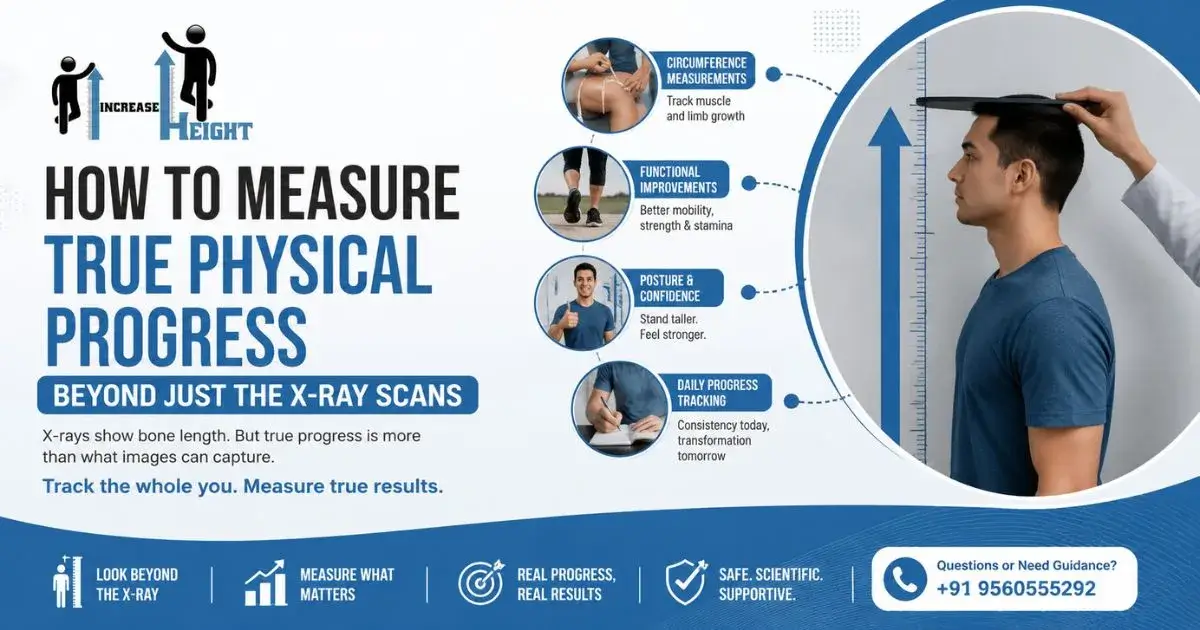
Good clinics have started building a fuller set of outcome measures in limb lengthening surgery into their follow up protocols. That usually includes gait analysis, strength testing on both the operated and non operated side, range of motion tracking, and patient reported questionnaires about pain, confidence, and daily function.
Two patients can have nearly identical X-rays at the twelve month mark and completely different quality of life. One might be back to their regular gym routine. The other might still be avoiding stairs or sitting out sports because their leg doesn't feel trustworthy yet. Without asking about function directly, that difference stays invisible on paper.
This is where outcome measures in limb lengthening surgery start to matter more than the imaging itself. A protocol that only checks bone density on film will keep missing patients who are technically healed but functionally behind. A protocol that also tracks strength, range of motion, and daily activity catches those cases early. Early enough to take action on them, whether that's more physical therapy, a longer wait time before getting back into sport, or just a more honest conversation about what to expect.
Putting It Together
If you're going through limb lengthening, or standing beside someone who is, don't let the X-ray be the only thing that counts as progress. Ask the surgical team how they're tracking strength. Ask how they check range of motion, and what they actually expect for full function at each stage. And ask what a realistic timeline looks like for movement itself, not just for the bone underneath it.
The scan will tell you the bone is solid. It won't tell you whether you can trust that leg on an uneven sidewalk, or carry a bag of groceries up a flight of stairs without thinking twice. That part of recovery gets measured in movement, not millimeters on a screen, and it deserves just as much attention as the imaging does.